Disclosure: This post contains affiliate links. We may earn a commission at no extra cost to you. We only recommend software we’ve tested and trust.

- No keyword tool has direct access to Google’s real search logs — every volume number is a modeled estimate, which is why tools can differ by 20–30% on the same term.
- Semrush’s keyword database alone covers more than 25 billion keywords across 142 country databases (Semrush, 2025).
- Organic search drives an average of 53% of all trackable website traffic (BrightEdge, 2023), making keyword selection a high-stakes decision, not a formality.
- Entry-level full SEO suites like Semrush and Ahrefs start around $99–$139/month; basic keyword-only tools run $15–$30/month, and free tiers like Google Keyword Planner exist with daily caps.
- As of 2026, a growing number of tools also estimate demand from AI chat platforms like ChatGPT and Perplexity — separate from, and sometimes larger than, traditional Google volume for the same topic.
Why This Matters for USA Businesses in 2026
If you’ve ever published a blog post and watched it get zero traffic, there’s a good chance the problem wasn’t your writing — it was your keyword. You picked a term nobody searches for, or one so competitive that a small business site has no realistic shot at ranking for it.
Keyword research software exists to fix that guessing game. This guide is for USA business owners and marketers who keep hearing “do your keyword research” but have never actually opened one of these tools or understood what it’s showing them.
of all trackable website traffic comes from organic search (BrightEdge, 2023) — which is why picking the right keyword matters more than most marketers assume
What Is Keyword Research Software? (Definition In Depth)
In plain English: it takes a word or phrase you’re considering — say, “CRM for small business” — and tells you roughly how many people search that phrase per month in the USA, how difficult it would be to rank on page one for it, and what kind of content currently satisfies that search.
A few terms you’ll see constantly inside these tools:
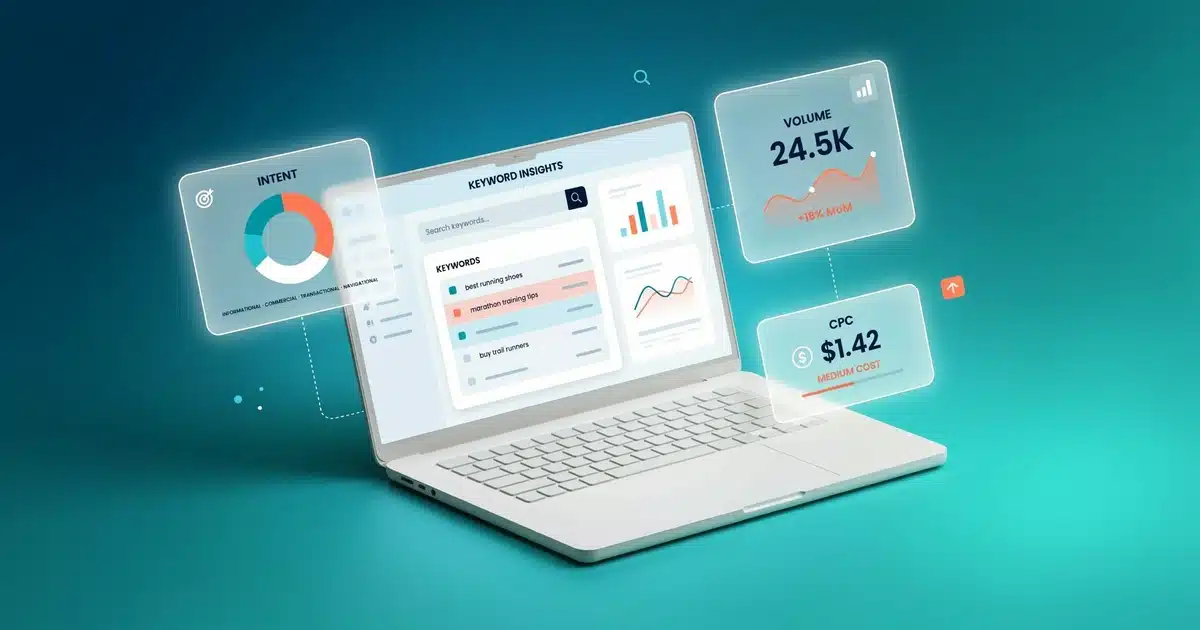
- Search volume — the estimated number of monthly searches for a term
- Keyword difficulty (KD) — a score, usually 0–100, estimating how hard it is to rank in the top results
- CPC (cost-per-click) — what advertisers pay per click on that term, often used as a proxy for commercial value
- Search intent — whether someone typing that phrase wants to learn something, compare options, or buy
In the context of USA business software, keyword research software sits inside the broader SEO software category, alongside site audit tools and rank trackers, but focuses specifically on the “what to target” question rather than technical site health.
The 2026 Shift: AI Search Demand
How Does Keyword Research Software Actually Work?
No keyword tool has direct access to Google’s real search logs — Google doesn’t share that data publicly. Instead, keyword research software builds its estimates from a mix of sources (this mirrors the broader question of how SEO software works across every category, not just keyword tools):
- Clickstream data — anonymized browsing data purchased from data panels, showing what real users searched and clicked
- Search engine APIs — limited, rate-controlled data pulled from Google Ads’ Keyword Planner and similar sources
- Crawled search results — the software regularly scans actual search result pages to see who’s ranking and what related terms appear
Think of it like a weather forecast — meteorologists don’t have a direct window into tomorrow, so they blend satellite data, historical patterns, and models into a probable estimate. Keyword research software works the same way.
That’s why two tools often report different volumes for the same keyword — they’re pulling from different data panels and using different modeling methods.
Why Keyword Research Software Matters
Without this data, content decisions come down to guesswork or opinion — and opinion doesn’t scale. Keyword research software lets a USA small business prioritize its limited content budget on topics people are actually searching for, instead of topics that just sound important internally.
Skipping keyword research doesn’t just slow growth; it often means paying a writer to create content that was mathematically unlikely to rank from the start.
Types of Keyword Research Software
Keyword research tools are just one piece of a much larger toolkit — see our full breakdown of the seven types of SEO software for how they fit alongside the rest. Within keyword research specifically, tools tend to fall into three buckets:
Keyword Research Software vs. Keyword Research (The Process)
These two terms get mixed up constantly, so let’s separate them clearly. The software is the instrument — keyword research is the skill of interpreting what it shows you and making a judgment call. (The same instrument-versus-skill distinction applies to on-page SEO software: the tool flags what to fix, but a person still decides what to prioritize.)
| What the software provides | Search volume estimates, difficulty scores, related keyword suggestions, intent classification |
|---|---|
| What the marketer decides | Which topics fit the business, whether a keyword is realistically winnable now, and how to structure content for that intent |
A tool can tell you a keyword gets 5,000 searches a month — it can’t tell you whether that’s the right keyword for your specific business this quarter.
How to Get Started With Keyword Research Software
Pick one tool to start with
Don’t try to learn three tools at once. What you need is one reliable volume-and-difficulty tool.
Enter 3–5 seed keywords
Choose terms related to your core products or services.
Filter by intent and difficulty
Sort for informational or commercial intent depending on your goal, and filter out anything above your site’s realistic difficulty range.
Build a starter list of 15–20 keywords
Mix a few competitive terms with several easier long-tail phrases.
Map each keyword to a content type
Decide on blog post, comparison page, or product page before you write anything.
Best Tools for Keyword Research — Hands-On Tested
| Tool | Best For | Starting Price | Free Plan |
|---|---|---|---|
| Semrush | Full-suite SEO management and agencies | ~$139/mo | Limited trial |
| Ahrefs | Backlink-heavy competitive analysis | ~$129/mo | No free plan |
| Google Keyword Planner | Solo marketers and early-stage businesses | Free | Yes — requires a Google Ads account |
Pricing shown reflects publicly listed rates as of July 2026 and can change — always confirm current pricing on the tool’s site before buying.
Not sure which one fits your budget and workflow? Our guide on how to choose the best SEO software breaks down the criteria that actually matter, and our SEO software statistics roundup has current market pricing and adoption data if you want the bigger picture.
Ready to compare options in more depth? See our breakdown of the seven types of SEO software, or head straight to what SEO software actually does.
Key Takeaways
- Keyword research software estimates search demand and ranking difficulty — it doesn’t tell you what to write, only what’s worth writing about.
- No tool sees Google’s real search logs; every number is a modeled estimate, which is why tools disagree by 20–30%.
- Free tools (Google Keyword Planner) work for early-stage testing; paid suites (Semrush, Ahrefs) earn their cost once you’re publishing regularly.
- As of 2026, some tools also estimate demand signals from AI chat platforms like ChatGPT and Perplexity, not just Google.
Frequently Asked Questions
Is keyword research software accurate?
What’s the difference between free and paid keyword research software?
Do I need keyword research software if I’m just starting out?
How much does keyword research software cost?
Can I do keyword research without software?
What’s the best keyword research software for beginners?
How often should I redo keyword research?
I’m Shamim Sarker, founder of SoftwareAdvisorHub.com — an independent software review platform built after 8+ years of hands-on SaaS testing. I never accept payment for positive reviews, and I always disclose affiliate relationships upfront.
My goal: Help you find the right software without wasting money on the wrong one.
Areas of Expertise: SEO Tools · Email Marketing · AI Writing Tools · Ecommerce Platforms · CRM Software · Project Management · Analytics
Every review is based on real hands-on testing — no paid placements, no vendor influence. Affiliate links are always disclosed.