
- Email returns $36 per $1 according to Litmus and $42 per $1 according to the DMA (via Mailneo). AgencyAnalytics puts paid social near $2.80 per $1 but doesn’t name its underlying study.
- Organic social reach is small: Instagram posts reach about 4% of followers (Socialinsider, 2023), and Facebook Page posts reach roughly 1% to 2% (SocialStatus).
- In CreatiCalc’s 2026 benchmarks, TikTok averages a 4.25% engagement rate by followers, while Facebook sits at 0.15%.
- Facebook lead campaigns average $27.39 per lead and convert at 8.54%, per WordStream’s 2026 benchmarks, which makes ads a practical way to fill an email list.
- HubSpot’s 2025 State of Marketing report ranks email the top ROI channel for B2C brands but leaves it outside the top three for B2B.
You have a limited marketing budget and maybe five spare hours a week. Should that time go into growing an Instagram following, or into building an email list your followers may never join? That is the real question behind email marketing vs social media marketing, and most answers online come from companies with a stake in one side.
When we reviewed Google’s top ten U.S. results for this topic in September 2026, eight of the ten pages were published by email or marketing software vendors. Not surprisingly, nearly all of them declare email the winner. Some of their numbers are sound. Others are a vendor’s own customer data presented as an industry average.
This guide takes a more neutral approach. We compare both channels on reach, ROI, conversions, cost, and audience ownership using the latest available data. When research firms disagree, we show each figure and name its source instead of picking the most flattering one.
By the end, you’ll know which channel deserves your next dollar for your type of business, how to make the two work together, and which tools are worth a look for each job.
This guide is research-based, not hands-on tested. Channel statistics come from named third-party studies and benchmark reports, and we show competing figures side by side when sources disagree. Tool recommendations are based on G2 ratings and user feedback checked in September 2026, plus pricing and features from each vendor’s official pricing page. Vendor-published figures, such as Omnisend’s merchant ROI, are labeled as vendor-reported.
Quick Verdict: Is Email Marketing Better Than Social Media?
Email: Conversions & Retention
Social: Discovery & Awareness
- Email marketing: Best for conversions, retention, and repeat revenue. Litmus puts its return at $36 for every $1 spent, and the Data & Marketing Association (DMA) reports $42 per $1 (both compiled by Mailneo).
- Social media marketing: Best for discovery, brand awareness, and community. Paid social returns about $2.80 per $1, according to AgencyAnalytics (2023), which doesn’t name the underlying study, so treat it as a rough estimate. Organic results are harder still to measure.
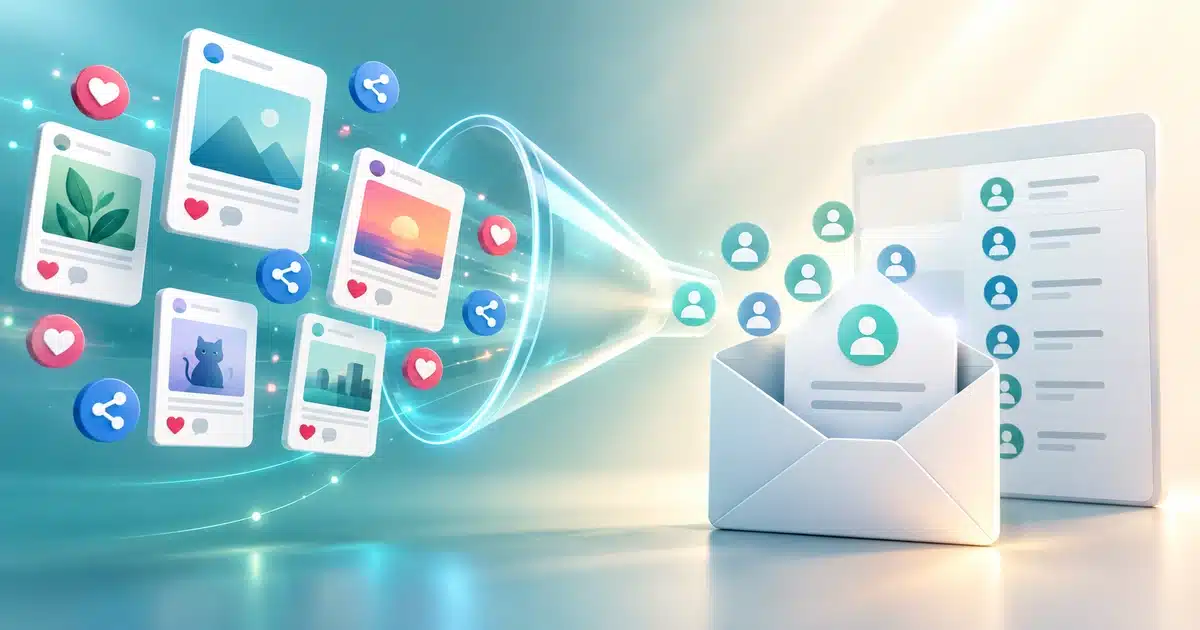
- Best overall strategy: Use social media to reach new people, then move them onto an email list where you control the relationship.
- Our top tool pick: MailerLite, the best budget email tool for small teams. It’s free for up to 250 subscribers, and paid plans start at $12/month, according to MailerLite’s pricing page (September 2026). Source tier: Aggregated From Review Platforms + Vendor-Reported.
If you can only start one thing this month, start an email list and use your social profiles to fill it.
What Are Email Marketing and Social Media Marketing?
What is email marketing?
Email marketing is sending promotional, educational, or automated messages directly to people who have opted in to your list. It covers newsletters, welcome series, abandoned cart reminders, and product launches. Because subscribers gave you their address, you can segment them by behavior and reach them whenever you choose. According to Statista, about 4.6 billion people use email worldwide (via InboxAlly, 2026).
What is social media marketing?
Social media marketing is promoting your brand on platforms like Facebook, Instagram, TikTok, LinkedIn, and X. It combines organic posts, community engagement, influencer partnerships, and paid social advertising. Anyone can see your content, but each platform’s algorithm decides who actually does.
Does email marketing count as social media marketing?
No. Email marketing is a direct, permission-based channel you own. Social media marketing happens on third-party platforms that own the audience and control its reach. The two often work together, but they are separate channels with different rules, metrics, and strengths.
Email Marketing vs Social Media Marketing: 7 Key Differences
Here’s how the two channels compare at a glance. Each row is explained in more detail below.
| Factor | Email Marketing | Social Media Marketing |
|---|---|---|
| Reach | Limited to your list, but most messages arrive | Huge potential audience, low organic reach |
| Engagement | Private clicks and replies | Public likes, comments, and shares ✓ |
| Conversions | Stronger, since subscribers opted in ✓ | Weaker for direct sales |
| ROI | $36 per $1 (Litmus) to $42 per $1 (DMA) ✓ | About $2.80 per $1 for paid social (AgencyAnalytics estimate) |
| Ownership | You own the list ✓ | The platform owns the audience |
| Cost | Low, predictable software fees | Free to post, but reach often requires ad spend |
| Measurement | Clicks and sales are easy to track ✓ | Attribution is harder, especially for organic |
1. Which channel has better organic reach?
Social media offers a far bigger potential audience, but organic reach is small. Instagram posts reach about 4% of followers on average, according to Socialinsider’s 2023 data. For Facebook Page posts, SocialStatus figures put organic reach under 1% (cited by Omnisend) or about 2% in its 2023 benchmark (cited by EmailToolTester), depending on the dataset. Email is limited to your list, but most of it arrives. In EmailToolTester’s most recent deliverability test (January 2024), roughly four out of five emails reached the inbox on average across providers.
2. Which channel gets more engagement?
Social media wins on visible engagement and viral potential, because every share pushes your post to a new audience. Email engagement is quieter. It happens as private clicks and replies, and those actions tend to carry more buying intent than a like.
3. Does email convert better than social media?
Email usually converts better because subscribers have already raised their hand. The exact number depends on who you ask:
- 2.8% (B2C) and 2.4% (B2B) average email conversion rate: FirstPageSage, 2025 (via HubSpot)
- 1.22% average, 3.71% for top-quartile senders: Campaign Monitor, 2024 (via Mailneo)
- 4.24% for abandoned cart emails: Barilliance (via Mailneo)
There’s no clean social media equivalent. The closest widely reported figure is the average click-through rate on social media ads, which was 0.66% in Q2 2024, according to Statista (via Omnisend). That measures clicks, not purchases, so it sets a ceiling on social conversions rather than offering a direct match. Email studies also define “conversion” differently, so treat the figures above as benchmarks, not exact comparisons.
4. Which channel has the higher ROI?
Email marketing ROI is reported at $36 per $1 by Litmus and $42 per $1 by the DMA (both via Mailneo). Omnisend reports $76 per $1 for its own merchants, but that figure is vendor-reported from its internal customer data, not an independent study. Social media ROI is harder to pin down. AgencyAnalytics estimates paid social at $2.80 per $1, but it doesn’t name the underlying study. Still, HubSpot’s 2025 State of Marketing report ranked email first and paid social second for B2C ROI, so social is far from a losing bet.
5. Who owns your audience, and what rules apply?
This is the owned vs. rented audience problem. You can export an email list and move it to any provider. A social following lives on someone else’s platform, where an algorithm change or account suspension can cut your reach overnight.
Email does come with rules. The U.S. CAN-SPAM Act requires a working unsubscribe link and a valid physical mailing address in every commercial email, as the FTC’s CAN-SPAM compliance guide explains. Since February 2024, Gmail and Yahoo also require bulk senders (5,000+ messages a day) to authenticate with SPF, DKIM, and DMARC, offer one-click unsubscribe, and keep spam complaints under 0.3%, according to Google’s email sender guidelines.
6. Which channel has a lower customer acquisition cost?
Email costs are predictable: you pay a software fee based on list size. Organic social is free to post but expensive in time, and reliable reach usually means paid social advertising. That tends to give email a lower customer acquisition cost (CAC) once your list exists. If you’re still choosing a platform, our small business email marketing software guide compares the leading options. We break down real dollar figures in the cost comparison below.
7. Which channel is easier to measure?
Email is easier to measure, with one big caveat. Apple Mail Privacy Protection now affects roughly 50% to 60% of recorded email opens, inflating open rates (Litmus, via InboxAlly). Social has the opposite problem: people often see a post, don’t click, and buy later, so organic social rarely gets credit for the sales it influences.
Because Apple Mail Privacy Protection inflates open rates, judge your email program on clicks and conversions instead of opens.
2026 Social Media Engagement Benchmarks by Platform
Engagement rates tell you how hard each platform makes you work for attention. They also explain why social media is better at discovery than at driving sales. The latest benchmarks show wide gaps between platforms:
| Platform | Avg. Engagement Rate (2026) | Measured By | Source |
|---|---|---|---|
| 5.20% | Impressions | Socialinsider | |
| TikTok | 4.25% | Followers | CreatiCalc |
| YouTube | 3.06% | Views | CreatiCalc |
| 1.81% | Followers | CreatiCalc | |
| X (Twitter) | 1.11% | Followers | CreatiCalc |
| 0.15% | Followers | CreatiCalc |
Be careful comparing rows that use different methods. LinkedIn’s 5.20% comes from Socialinsider’s study of 1.3 million posts from 16,645 business pages, and it divides interactions by impressions, not followers. That tends to produce higher numbers. The chart below compares only the four platforms measured the same way.
Average engagement rate by followers, 2026. TikTok’s rate is roughly 28 times Facebook’s.
Two trends stand out in CreatiCalc’s 2026 benchmarks, which draw on a 350,000-account study by SociaVault Labs. First, engagement is falling on most platforms: TikTok dropped 17%, Instagram 14%, and X 20% between 2024 and 2026. Second, Facebook has held at about 0.15%, the lowest of the four.
What does this mean for you? If your audience lives on TikTok or LinkedIn, organic social can still earn real attention. On Facebook, reaching people without paid social advertising is very difficult.
Email doesn’t have an equivalent “engagement rate,” so we don’t place it on this chart. The fair comparison is clicks and conversions, which we covered in the differences section above.
How Much Do Email and Social Media Marketing Cost?
Cost is where small businesses usually feel the difference first. Email costs a predictable software fee that grows with your list. Social media is free to post on, but serious reach costs either time or ad spend. Here’s what each approach costs in 2026, based on vendor pricing pages and current ad benchmarks:
| Approach | Typical Monthly Cost | What You Get | Best For |
|---|---|---|---|
| Email, just starting Best Value | $0 | MailerLite Free: up to 250 subscribers and 2,500 emails a month | Testing email with a brand-new list |
| Email, growing list | From $12 | MailerLite Comfort or Constant Contact Lite; price rises with contact count | Small businesses sending regular newsletters and automations |
| Email + social in one tool | From $12 | Constant Contact Lite includes posting and scheduling to Facebook, Instagram, and LinkedIn | Solo owners who want one dashboard |
| Organic social, pro tool | From $99 per user | Hootsuite Standard (billed annually): up to 10 social accounts, plus your time to create content | Teams managing several platforms |
| Paid social (Facebook) | Your ad budget | Average $1.80 per click and $27.39 per lead on lead campaigns | Reaching new audiences fast |
Pricing is vendor-reported from the MailerLite, Constant Contact, and Hootsuite pricing pages as of September 2026. Ad costs are from WordStream’s 2026 Facebook Ads Benchmarks, based on U.S. campaigns from April 2025 to June 2026.
Put those numbers side by side and the math is simple. A $500 monthly Facebook budget buys about 18 leads at the average cost per lead. The same $500 would cover MailerLite’s $12 Comfort plan for more than three years at up to 500 subscribers. Past that, the price rises with your list, but you can email every subscriber as often as your plan allows without paying per message.
Paid social isn’t a bad deal, though. WordStream found Facebook lead campaigns convert at 8.54%, which makes ads a practical way to fill an email list in the first place. For most small businesses, the most cost-effective setup is a low-cost email plan paired with a modest ad budget pointed at a signup offer.
See MailerLite’s Latest Pricing →
Pros and Cons of Email Marketing vs Social Media
Neither channel is perfect. Here’s an honest look at where each one pulls its weight and where it lets you down.
What are the pros and cons of email marketing?
- You own the list and can move it to any provider
- Highest reported ROI of the two: $36 per $1 (Litmus) to $42 per $1 (DMA)
- Automations like welcome series and cart recovery run on their own
- Segmentation by behavior and purchase history
- Predictable software costs, starting at $0
- Building a list from zero is slow
- Deliverability takes setup: SPF, DKIM, DMARC, and CAN-SPAM compliance
- Apple Mail Privacy Protection makes open rates unreliable
- Almost no viral reach beyond your list
- Lists decay as people change jobs and email addresses
What are the pros and cons of social media marketing?
- Reaches people who have never heard of you
- Content can go viral through shares
- Public comments build social proof and real-time conversation
- Paid ads offer precise targeting, from about $0.60 per click on Facebook traffic campaigns
- Visual formats like Reels and TikTok videos show products well
- Low organic reach, especially on Facebook
- The platform owns your audience and can change the rules
- Creating content takes a lot of ongoing time
- ROI is hard to attribute, especially for organic posts
- Engagement is declining on most major platforms
Email’s weaknesses are mostly about getting started, while social media’s are about control, so each channel covers the other’s biggest gap.
Best Tools for Email and Social Media Marketing in 2026
The right tool matters less than using one consistently, but a poor fit can cost you money and hours. These three cover the main jobs: a budget email platform, an all-in-one option, and a dedicated social media manager.
Source tier for all three: Aggregated From Review Platforms (G2 ratings and user feedback, checked September 2026) and Vendor-Reported (pricing and features from each vendor’s site). We have not personally tested these tools for this article.
| Feature | MailerLite | Constant Contact | Hootsuite |
|---|---|---|---|
| Best for | Budget email marketing | Email + social in one dashboard | Managing many social accounts |
| Core channel | Email, with social posting | Social media | |
| Starting price | $0; paid from $12/mo ✓ | From $12/mo (Lite) | From $99/user/mo, billed annually |
| Free plan | ✔ Up to 250 subscribers | ✘ Free trial, no credit card | ✘ 14-day free trial, no credit card |
| G2 rating | 4.6/5 (1,113 reviews) | 4.1/5 (7,537 reviews) | 4.3/5 (7,463 reviews) |
| Common complaint on G2 | Missing advanced features | Limited features and customization | Pricing for small teams |
MailerLite: best budget email tool
MailerLite is a low-cost way to start building a list (see our MailerLite review for a full breakdown). G2 reviewers consistently praise its drag-and-drop editor, affordable pricing, and built-in landing pages and forms. The trade-off is depth: users who need complex, enterprise-grade automation say it runs out of room.
Start MailerLite’s Free Plan →
Constant Contact: best for email and social in one place
If you’d rather not juggle two tools, Constant Contact includes posting and scheduling to Facebook, Instagram, and LinkedIn on every plan, according to its pricing page. G2 users highlight its ease of use and reliable delivery, while the most common complaints are limited features and customization, plus costs that climb as your contact list grows.
Hootsuite: best dedicated social media tool
Hootsuite is built for teams running several social accounts at once. G2 reviewers rate its scheduling and centralized account management highly. Be aware of the price, though: at $99 per user per month, it’s more than most solo owners need, and pricing is one of the most common complaints on G2. Our best social media management tools guide covers lower-cost options.
Start Hootsuite’s 14-Day Free Trial →
Should You Prioritize Email Marketing or Social Media Marketing?
It depends on where your customers are in the buying journey and what your business sells. Use this table as a starting point:
| Your Business | Lead With | Why |
|---|---|---|
| Ecommerce store | Automated flows like cart recovery turn existing traffic into sales | |
| B2B or SaaS | Email, plus LinkedIn | Long sales cycles need lead nurturing; LinkedIn builds credibility |
| Local service business | Social media | Visual proof of work and reviews help nearby customers find you |
| Creator or influencer | Social media, then email | Platforms drive discovery, but a list protects you from algorithm changes |
| Brand-new business | Social media, with a signup form from day one | You need an audience before email has anyone to reach |
Is email or LinkedIn better for B2B lead generation?
B2B buyers deserve a closer look, because the data points in a different direction than it does for consumer brands. HubSpot’s 2025 State of Marketing report left email out of the top three ROI channels for B2B, behind website and SEO, paid social content, and social shopping tools. LinkedIn also posts the highest engagement rate in our benchmark table, at 5.20% by impressions, according to Socialinsider.
That doesn’t make email optional for B2B. Long sales cycles and multiple decision-makers mean most leads aren’t ready to buy on first contact, and email is how you stay in front of them until they are. The practical B2B setup is LinkedIn for credibility and discovery, a gated resource to capture the lead, and an email nurture sequence to move it toward a sales conversation.
Either way, start email list building immediately, because every visitor who leaves without subscribing is someone you may never reach again.
Is email marketing dead?
No. About 4.6 billion people use email, and Statista projects nearly 4.9 billion by 2027 (via InboxAlly).
Do young people still use email?
Yes. Around 90% of people aged 15 to 24 used email, only slightly behind older groups, according to older FinancesOnline data cited in a roundup of 2016 to 2019 statistics by OptinMonster. They may not email friends, but they use it for shopping, accounts, and subscriptions.
How to Use Email and Social Media Marketing Together
The strongest omnichannel marketing setups treat social media as the front door and email as the living room. Here’s a simple five-step system you can set up in a weekend:
Pick one primary social platform. Choose the one where your customers already spend time, such as LinkedIn for B2B or Instagram and TikTok for consumer products. One active account beats four abandoned ones.
Create a lead magnet. Offer something worth an email address: a discount code, a checklist, a template, or a short guide.
Add signup calls to action everywhere. Put your signup link in your bio, mention the offer in posts and Stories, and point a small ad budget at the landing page.
Automate a welcome sequence. Set up a short series of emails that delivers the lead magnet, introduces your brand, and makes a first offer. Most email tools support this kind of marketing automation. Even MailerLite’s free plan allows 3 active automations with up to 5 steps each, according to its pricing page.
Close the loop. Turn your best newsletter content into social posts, and upload your list to Meta’s Custom Audiences to retarget subscribers or find lookalike audiences.
Once this runs, your channels feed each other: social grows the list, and email turns that list into revenue.
What Do Marketers Say Works Better?
Marketer surveys don’t agree, and the disagreement is useful. Notice who ran each survey, because most of them sell one of these channels:
- Email wins: 41% of marketers rank email as their most effective channel, compared with 16% for social media, according to Omnisend, an email platform (via That Marketing Buddy).
- Social pays too: 90% of marketers say social media activity produces measurable revenue, according to Sprout Social, a social media management company (via Landingi).
- It depends on your market: HubSpot’s 2025 State of Marketing report ranked email the top ROI channel for B2C brands. For B2B brands, the top three were website and SEO, paid social content, and social shopping tools, with email outside the top three (HubSpot Marketing Statistics).
The takeaway is that both channels produce real revenue. Email tends to lead for consumer brands with repeat buyers, while B2B marketers are getting more from content and paid social than most email-first articles suggest. That’s why our decision table pairs email nurturing with LinkedIn for B2B instead of relying on email alone.
Final Verdict: Email Marketing vs Social Media Marketing
Email marketing is the better channel for turning an audience into revenue, and social media marketing is the better channel for building that audience in the first place.
The numbers back that up. Email returns an estimated $36 (Litmus) to $42 (DMA) per $1, reaches a list you own, and keeps working when an algorithm changes. Social media reaches people email never could, and paid social can turn strangers into leads fast, at about $27 per lead on Facebook, according to WordStream’s 2026 benchmarks.
Asking which channel wins is a bit like asking whether a store needs a sign or a cash register.
Should You Focus on Email or Social Media?
If you’re starting from zero, spend most of your time on one social platform, but put an email signup offer in front of every visitor from day one. If you already have customers or traffic, make email your priority and use social to keep the list growing. For most small businesses, a free or low-cost email plan is a smart first investment, and you can add a social media tool once your list starts to grow.
Frequently Asked Questions
Which has a higher ROI, email marketing or social media?
Email marketing usually has the higher ROI. Litmus reports $36 and the DMA reports $42 for every $1 spent on email. AgencyAnalytics estimates paid social at about $2.80 per $1, though social ROI is harder to measure because many sales it influences happen later through other channels.
Can social media replace email marketing?
No. Social media can’t fully replace email because you don’t own your followers. A platform can change its algorithm, raise ad prices, or suspend your account, and your reach disappears. An email list belongs to you and moves with you to any provider. Social media works best as a way to grow that list, not as a substitute for it.
Is email marketing still effective in 2026?
Yes. About 4.6 billion people use email, and Statista projects nearly 4.9 billion by 2027. Email still delivers one of the highest reported returns of any marketing channel. The main change is measurement: Apple Mail Privacy Protection inflates open rates, so most marketers now judge email on clicks and conversions instead.
Which is more cost-effective for a small business?
Email is usually more cost-effective once you have a list. Tools like MailerLite start free, and paid plans begin around $12 a month. Organic social is free to post but costs hours of content work, and paid social averages about $27 per lead on Facebook. Many small businesses get the best value by pairing a cheap email plan with a small ad budget.
Is social media more likely to go viral than email?
Yes. Social platforms are built for sharing, so a single post can reach far beyond your followers. Email rarely spreads past your list, since few people forward marketing emails. Just don’t plan around going viral. It’s unpredictable, and a steady email list is a more reliable way to reach the same people again and again.
How do I turn social media followers into email subscribers?
Give followers a clear reason to join your list. Offer a lead magnet such as a discount code, checklist, or short guide, then put the signup link in your bio, mention it in posts and Stories, and consider a small ad budget pointed at the landing page. Follow up with an automated welcome email so new subscribers get value right away.
How often should I send emails versus post on social media?
There’s no universal rule, but a common starting point is one email a week or every other week, and several social posts a week on your main platform. Email can be less frequent because it reaches most of your list each time, while each social post reaches only a small share of followers. Watch your unsubscribe rate and engagement, then adjust.
References
I’m Shamim Sarker, founder of SoftwareAdvisorHub.com — an independent software review platform built after 8+ years of hands-on SaaS testing. I never accept payment for positive reviews, and I always disclose affiliate relationships upfront.
My goal: Help you find the right software without wasting money on the wrong one.
Areas of Expertise: SEO Tools · Email Marketing · AI Writing Tools · Ecommerce Platforms · CRM Software · Project Management · Analytics
Every review is based on real hands-on testing — no paid placements, no vendor influence. Affiliate links are always disclosed.